The church
and the animal movement
The beginning of a revolution?
by Marianne Arbogast
This
August, an Episcopalian high-school student in Cincinnati organized a downtown
youth event called Compassionfest to promote vegetarianism and respect for animals.
In the same city, animal-rights activists convinced Catholic bishop Daniel Pilarczyk
to ask parishes to forego turtle racing and "rat-spinning" games at
their summer festivals.
John Dear, a Jesuit priest and peace activist who has served as executive director of the Fellowship of Reconciliation, wrote a pamphlet on Christianity and vegetarianism that is being distributed through PETA (People for the Ethical Treatment of Animals). And if you spot the slogan "WWJE?" its not a misprint, but a campaign by the Christian Vegetarian Association asking people to consider what Jesus would eat today.
Limited though they might be, these efforts seem to point to a growing impulse among people of faith to examine the human treatment of animals more seriously.
"Theres no question that peoples consciousness is growing," says Bruce Friedrich, a PETA staff member who spent time in prison with John Dear following a 1993 ploughshares action in which they hammered and poured blood on a nuclear fighter bomber. "I think we are at the beginning of a revolution in the church with regard to how animals are viewed. The animal movement has drawn more and more people of faith who want to help the church move along in its understanding that Gods covenant is not just with human beings. I think that mainstream theological scholarship will come to embrace animals for the same reason that it had to recognize that human relationships like slavery and subjugation of women were out of keeping with Gods ideal, how God wants us to live our lives."
Were not the only ones that praise
Scholars point out that the tendency to view humans as separate from the rest of creation is not a biblical perspective.
"The whole idea of animal as an utterly distinct category from the human is foreign to biblical ways of thinking," says Jay McDaniel, a process theologian who has articulated an ecological Christianity that views animals as beings with intrinsic value in and for themselves. "We humans come from the dust like other creatures, were creatures of the flesh like other creatures. And it was obvious to biblical authors that were not the only ones that feel, were not the only ones that suffer, were not the only ones that praise, as the psalmists would recognize."
A
feminist-vegetarian ethic:
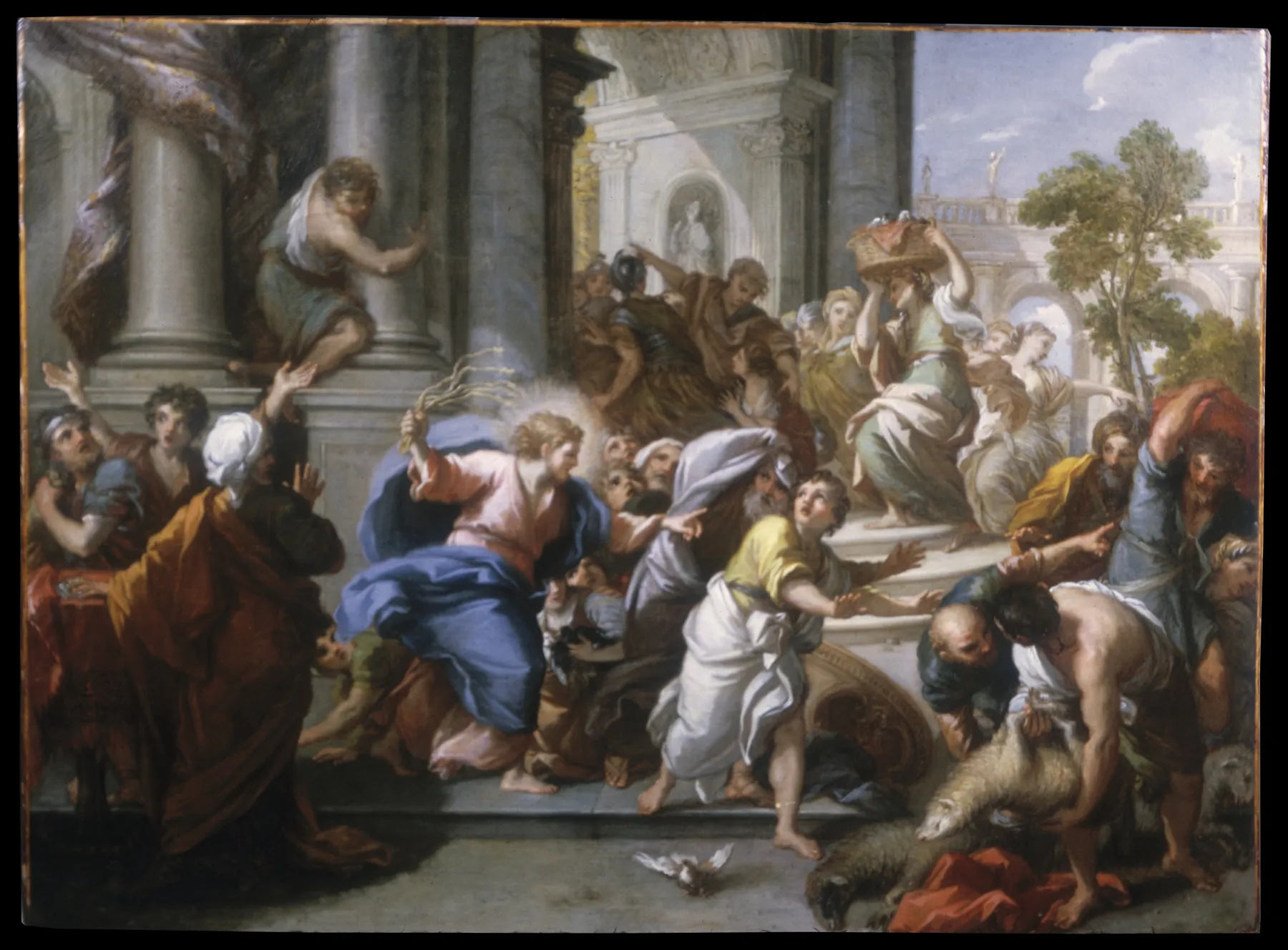
The Witness: How do you see the connection between oppression of animals and the oppression of women and other human beings? Carol Adams: For one thing, we often exhibit an anxiety about what we define as human, and historically Western culture has controlled that definition very tightly. For a long time what was human was really white male. Theres a feminist historian who said the period of time after the American Revolution was a very traumatic time period for women, because you had all this talk about human rights and yet womens rights were receding during that time. Human was defined as man, and implicitly it was defined as white. We get movements that try to expand the definition of human because the recognition is that when something is defined as not human it does not have to be taken seriously it can be abused, it can be misused. When I see the pin, "Feminism is the radical notion that women are human," I cant agree with that. I dont want to simply redefine human to include women. I want to problematize the definition of human, and especially the theological point of view that theres God, us humans and everyone else in this hierarchy. Secondly, we cant accept the notion that the ends justify the means. And it seems to me that both meat-eating and the oppression of other people are justified because the end result is something that people want. In The Sexual Politics of Meat, I talk about the structure of the absent referent, that animals are made absent to meat-eating because theyre killed. And theyre made absent conceptually people really dont want to be reminded that theyre eating a dead cow, a butchered lamb, a slaughtered pig. And the absent referent then becomes a free-floating thing. For instance, meat becomes a metaphor for what happens to women. Other beings who are not held in high regard may be equally victimized by the means/ends dichotomy. Thirdly, Im against violence. Do the least harm possible. Oppression requires violence and implements of violence, and this violence usually involves three things: objectification of a being so that the being is seen as an object rather than as a living, breathing, suffering being; fragmentation, or butchering, so that the beings existence as a complete being is destroyed one way or another; and then consumption either literal consumption of the non-human animal or consumption of the fragmented woman through pornography, through prostitution, through rape, through battering. So I see a structure that creates entitlement to abuse because within the structure of the absent referent the states of objectification and fragmentation disappear and the consumed object is experienced without a past, without a history, without a biography, without individuality. The Witness: Many people today, especially with the growth of the environmental movement, would say that we shouldnt mistreat the earth or non-human creatures but they would see the food chain as a natural or divinely ordained thing, and would not see animals eating animals and humans eating non-human animals as mistreatment. Carol Adams: I think we end up with two problems within religious circles. Meat-eating is both naturalized and spiritualized. This happened at the American Academy of Religion (AAR) where we did the first-ever panel on animals several years ago. What was so profound about the experience was that the arguments I heard from people there the scholars were the same arguments I hear when Im on call-in radio stations here in Texas. When it comes to animals, the level of engagement and thought is pretty undeveloped. So meat-eating is naturalized. There are two things we need to respond to here. One is that, supposedly, we humans get to eat animals because were different from animals and then suddenly the justification for eating these non-humans is that other non-humans do it. We become inconsistent. Secondly and I think this is part of patriarchal culture we not only symbolically uphold carnivores in our culture, we uphold what are called the top carnivores, carnivores that actually eat other carnivores. Most meat-eaters eat herbivores. Humans are a good example we eat cows, lambs, etc. Yet we uphold lions and eagles in a cultural mythology carnivorous beings who are actually more carnivorous than we are. The fact is, less than 6 percent of animals actually are carnivorous. We just have such an overabundance of carnivorous examples around nature shows celebrate the carnivore that we have a skewed view of why other animals actually die. Most other animals do not die because they are eaten by carnivores. Now there are some people ecologists, environmentalists who say, I want to use everything and I thank the animal for the sacrifice, etc. I feel that this has a tendency to use the sacrificial language that Christianity has sort of sanctified without ever saying, well, maybe its our turn to sacrifice. Why all these years is it only the non-humans who are to sacrifice themselves to the humans? Maybe its time for the humans to sacrifice ourselves to the non-humans by not eating them. And secondly, how do we know that those animals wanted to be sacrificed especially if that argument is coming from someone who is not a hunter? They use in a sense they abuse a native relationship with animals. Out of all the native ways of relating to non-humans, the only ones that are brought into the dominant culture are the ones that can be used to justify what were already doing. There are lots of native cultures that didnt eat animals. When we were at the AAR somebody stood up and said, its a dog-eat-dog world. Well, my response is, no it isnt, dogs arent eating dogs. Andrew Linzey, who really pioneered in this field, asked, didnt Jesus come to change that world? If were Christians, why do we accept that its a dog-eat-dog world in any of our relationships? And if the naturalizing argument doesnt work, then the spiritualizing argument comes in: Well, we were given dominion, we are not like the other animals. But what is that dominion? The dominion in Gen. 1:26 is granted within a vegan world. People spiritualize and they naturalize because they dont want to change you could easily spiritualize and naturalize a whole different argument. The Witness: You have advocated an ethic of care, rather than animal rights. How is this different? Carol Adams: Well, my concern about animal rights language is that it arises within the same philosophical framework that gave us a differentiation between what was man/human and everyone else. The universal rights language is part of the notion of the Enlightenment man, who was an autonomous being separate from everyone else. In fact, no one is autonomous. We first learn in relationship. We learn to walk, we learn to talk in relationships. So the ethics of care critiques the notion of the autonomous man upon which the fundamental right is based. But secondly, the language of animal rights came out of a need to prove that not only was it non-emotional, but it was manly. Were not getting upset about non-humans, its not that its upsetting its the right thing to do. And some of us have come along and said, it is upsetting. Being upset is a legitimate form of knowledge. Why cant we trust anger and other emotions that we feel when we hear about chickens being de-beaked and veal calves being removed from their mothers in less than 24 hours? Why cant outrage and caring truly inform who we are as people? People come back and say, youre saying women care more than men. No, were saying that a male-identified form of thinking has triumphed over a female-identified form of responding and thinking. The Witness: Part of your argument is that were dissociated from the animal were actually eating, we dont see the animal because weve made it into "meat." But theres another kind of argument that says that the real problem is that we have become separated from farming, for instance, and living close to the land; that were separated from all of those natural realities, and if we feel bad when we think about it its just some kind of sentimentalism because farmers or hunters dont feel bad. Some people in the mens movement have felt they ought to go out and kill a deer almost as a ritual. Carol Adams: Whats wrong with being sentimental? It goes back to the ethics of care. Perhaps sentiment is what we need. If theres something that makes you uneasy, perhaps the thing is not to conform your emotions to what culture is telling you, but to conform culture to what your emotions are telling you, which is that there might be something wrong here. I grew up in a farming community. I watched butchering as a child. My sister was allowed to dip the dead pig into the boiling water and there was a sort of gothic fascination there. And Id go home and eat meat there was a complete disconnect. We were fascinated, but those animals were others, those animals were objectified beings. It is a violent process and most animals are not butchered down on the farm, they are butchered in a horrendous way. And I think that this "be-a-man" notion is exactly what, as Christians, we challenge. Whats the shortest verse in the Bible? "Jesus wept." What did Jesus do in the Temple? What was happening in the Temple? Animals were being sold, for heavens sakes. Jesus was angry about a lot of things, but perhaps one of them was that other beings were being sold there. The Witness: How do you see vegetarianism as a spiritual path? Carol Adams: For me, doing the least harm possible is a very spiritual path and a path with integrity. People think theyre going to harm themselves by giving up meat theres some protective nature there that keeps them from connecting the dots about the environment and human well-being and health. It would be helpful for people to feel like being on a spiritual path includes interacting with change, even at the most basic level of what were going to eat. Spiritual life is a life of abundance, but when it comes to meat-eating people think theyre going to experience scarcity. The most important thing vegans can do is simply live a life of abundance. |
Process thought offered McDaniel a way to integrate his intuitions about animals into a theological framework.
"I grew up with cocker spaniels, and from a very early age it was obvious to me that animals have souls if by souls you mean a seat of awareness, that theyre subjects of their own lives, that they count and that theyre kin to us. But nobody invited me to link that with my Christian faith until my discovery of process theology in seminary, and especially John Cobb. Process thought did talk about a God who loves animals no less than humans, a God who lures each living being toward satisfaction relative to the situation at hand, a God who shares in the suffering of all living beings."
For McDaniel, this acknowledgement of spiritual kinship is connected with ethical responsibility.
"Justice can begin with anger or it can begin with love," he says. "My in-laws are birders, and I would have to say, in some way, that their religion, their spirituality, lies in delight and appreciation of the beauty of birds. There are many people in this world that have had similar relations with companion animals, and we would be quite incomplete without those other living beings who are sources of such grace in our lives.To be awed and amazed and moved by their sheer beauty becomes a foundation to want to care for them and treat them justly."
Concern for animals is a matter of social justice as well as ecological sustainability, McDaniel believes. In his 1990 book, Earth, Sky, Gods, Mortals (Twenty-Third Publications), he quotes from a 1988 report by a group of theologians commissioned by the World Council of Churches: "Concern for animals is not a simple question of kindness, however laudable that virtue is. It is an issue of strict justice. ... That we may not have considered justice applicable to animals has something to do with how we have conceived the societies in which we live. If we think un-ecologically, we think of societies as human societies and of justice as justice for humans. It is as if we are insulated from nature, and nature from us, by an invisible boundary."
The best news for animals
Despite the development of multiple environmental theologies in recent years, relatively few theologians have focused on the status of animals as individuals or the human-animal relationship, McDaniel says. Of those that have, the most prominent is Andrew Linzey, an Anglican priest and professor at Oxford University, who began writing about Christianity and animal rights in the 1970s and has continued to provide a theoretical framework for Christian animal advocacy and activism.
"He set the tone and charted the ground," McDaniel says. "Andrew proceeds from a really traditional perspective hes grounded in the biblical tradition and he knows his history of Christianity well. He would say that in the history of Christianity, its probably been the lives of the saints that have been the best news for animals, and the theologians have not been such good news."
Linzey has documented an impressive history of concern for animals reflected in the lives of numerous saints and Christian writers from Tertullian to C.S. Lewis. Advocating for the "theos-rights" of animals as creatures of God, Linzey holds up the biblical vision of the Peaceable Kingdom as an image of Gods desire for harmony in creation, and the self-giving life of Jesus with its focus on service to "the least" as a pattern for moving toward that harmony.
Nature as we usually understand it falls short of that harmony, Linzey says.
"If one takes the natural world as it is now as a source of moral illumination, then it is difficult to see how one could support the moral movements of the last hundred years emancipation, justice and equality because nature as we understand it appears to make very little room for individual rights," he said in a 1993 interview with The Witness. "It was once thought and the Christian tradition helped sanction this that the relationship between men and women was essentially unequal. It was thought there was something given in nature, that differences between race or gender were such that relationships of equality and harmony were not possible. It seems to me that moral insight begins at the point at which we say, Im acting contrary to the order of the world as it now appears to me."
What about all the suffering?
McDaniel also considers the violence in nature as a theological problem.
"If youre honest, youve got to ask the question, what about all the suffering?" he says. "When the fox chases the rabbit, maybe the rabbit is giving himself to the fox but it doesnt look like that. And maybe that last moment of agony is, in fact, ecstatic union with the divine but it doesnt look like that."
In his 1989 book, Of God and Pelicans, he presents the pattern of pelican reproduction as a theological dilemma. The mother pelican lays two eggs, he explains, one of which hatches two days after the first. If the first chick survives, the second is rejected, kicked out of the nest and killed or left to starve.
"That second pelican chick became for me a kind of symbol of all that suffers," he says. "I had to say, where is God for that chick? And is this Gods great design? Were predator-prey relations part of the plan? Well, what kind of God is that? Thats a God who cares for the big picture but not the particulars, for the eco-systems but not the nodes in the web. And thats not the God of Jesus Christ.
"One person that worried about that, strangely enough, was John Wesley. He had this funny little sermon called The General Deliverance in which he imagined heaven as a place to which all animals would go, too. He built upon Romans the whole creation in groaning and travail awaits redemption at the end of time. He actually pictured animals as transcending their predatorial instincts, so when you go to heaven the lion loses its carniverousness. I think of my biologist friends saying, gosh, just accept reality, dont make them into something theyre not and I think theres wisdom in that critique. But I also think theres wisdom in Wesleys hope. This creation does involve a kind of tragic dimension, and in some mysterious way we do hope for a deep peace that all living things enjoy."
Feminists, Buddhists and evangelicals
Along with process theology and the tradition-based approach of someone like Linzey, feminist and particularly eco-feminist thought has offered a framework that takes animals seriously. Theologians including Rosemary Ruether, Carter Heyward and Marjorie Procter-Smith have written on the topic, and Carol Adams whose first book, The Sexual Politics of Meat, came out in 1990 has made it her primary area of focus [see interview, p. 8 ]. Adams developed the concept of the "absent referent" to describe the animal whose needs, interests and individuality disappear in the production of meat.
Theological scholarship has trailed behind philosophy and animal activism, Adams says.
"You have Peter Singers Animal Liberation coming out in 1976, and Tom Regans Case for Animal Rights in 1983, but its not really till 1990, 1991 that people who were animal advocates deliberately tried to engage theologians and professors of religion. I think many people who are religious care very much about non-humans, and they want their understanding of their religious beliefs to correlate with that."
Adams says she has seen a lot of change in the past 12 years, "not just within religion and theology, but in terms of more young people raising issues about animals. The greatest rise in vegetarians right now is in the age group of 8 to 13. I think kids are naturally interested in vegetarianism and do not really want to hurt animals. Then, when they get into high school, they somehow discover a book like mine, The Sexual Politics of Meat, and this concern about animals suddenly is given a different framework a framework that not only explains why its so legitimate, but shows that its connected to being concerned about the status of women, the status of people of color. This is what I hear from people all the time. They want to change the world and changing our relationship to non-humans is part of changing the world."
A recent book by Adams, The Inner Art of Vegetarianism (Lantern Books, 2000) is prefaced with a translation of a Sanskrit chant used at a yoga center: "May all beings be happy and free ... And may the thoughts and actions of my own life contribute in some way to that happiness and to that freedom for all." Adams wrote the book in an attempt to open dialogue between non-vegetarian spiritual practitioners and vegetarians without a spiritual practice, and her emphasis on Eastern spiritual practice (yoga and meditation) perhaps reflects another contemporary influence on Christian thinking about animals namely, a growing interaction with Eastern tradition that held animals in higher regard.
As Mary Jo Meadow, a Christian teacher of insight meditation, writes in her 1994 book, Gentling the Heart:
"The first precept in Buddhist morality is not to kill any form of sentient life. This is not limited only to those animals we love to touch or pet. It also includes the kinds that crunch if we step on them, that whir or buzz around our heads, and that instill fear in us. Practicing metta [loving-kindness] extends this non-harming attitude into one of positive well-being.
"At Insight Meditation Society in Barre, Mass., where I frequently do long meditation retreats, animals seem to sense the non-harming atmosphere. Birds regularly alight on peoples outstretched hands, even when they are not holding food. ... Dogs flock to the place from miles around; meditators must be asked to ignore them, so that they will be willing to return to their proper homes."
The ranks of Christian theologians and writers who are examining the spiritual significance of animals and our ethical responsibility toward them continue to grow. Evangelical writer J.R. Hyland who wrote The Slaughter of Terrified Beasts in 1988 recently published Gods Covenant With Animals. Stephen Webb, a religion professor at Wabash College and author of the book, On God and Dogs, wrote Good Eating, an examination of Christian vegetarianism from a traditional biblical perspective, and Baptist professor Richard Alan Young wrote Is God a Vegetarian? Unitarian minister Gary Kowalski, author of The Souls of Animals, has a new book titled The Bible According to Noah. A book called The Lost Religion of Jesus by Keith Akers which suggests that the nonviolence, simple living and vegetarianism of early Jewish Christian communities may better reflect Jesus teachings than the Pauline Christianity that won out in the canonical scriptures has achieved significant popularity among animal advocates and is being taken seriously by theologians such as Walter Wink, who wrote the introduction. Although their approaches span the religious and philosophical spectrum and disagreements abound, all are grappling seriously with the human-animal relationship.
Rejecting might makes right
For scholars and activists alike, the rubber often hits the road around questions of vegetarianism. Although not all would agree that meat-eating is inherently unethical, all would insist that it merits serious scrutiny, particularly in light of modern factory-farming practices.
"The vast majority of animals who live and die in the world are the animals who end up on peoples dinner plates," Bruce Friedrich says. "Twenty-six billion animals per year, including sea animals, are eaten just in the U.S. which is a daunting figure, since the human global population just passed six billion. So, for example, vivisection which Gandhi called the blackest of black crimes that humanity is perpetrating against other species involves a fraction of that number, probably around 20 million animals. At the end of the day, I think that the taproot of humanitarianism, as Tolstoy said, is vegetarianism because if, when we sit down to eat, we take the side of the strong against the side of the weak, and for no good reason at all we support violence and misery and suffering, I think it casts real doubt on all of our work for peace and justice in every other arena.
"I think of Jonah House and the Ploughshares movement, of which I remain a part, as working sort of top-down. It opposes the bomb, which is the epitome of an ecocidal culture. And then vegan advocacy works from the bottom up, recognizing that if people adopt compassionate diets so that throughout the day youre making decisions against the moral paradigm of might makes right that will cause a change in philosophical and religious understanding that would make the bomb impossible."
Friedrich recites the grim realities of modern factory farming.
"As long as its standard agricultural practice, anything goes." he says. "The animals have everything natural denied to them, they have their bodies mutilated, theyre pumped full of hormones and antibiotics. Chickens grow six to seven times as quickly as they did just 40 years ago by the time theyre slaughtered, in under two months, they cant even move comfortably anymore. I was just out in California looking at massive, feedlot-style dairy farms. These animals udders are massive, theyre just complete Frankenstein-animals. Theyre in chronic pain for their entire lives. Cows 30 or 40 years ago were walking around six or seven kilometers a day. Dairy cows these days basically just lie there on their massive udders waiting to be relieved of their agony. Theyre impregnated every year, their babies are stolen away from them within a couple days of birth and in every single instance the animals scream out in fear and frustration just like a human mother would. I dont think anybody with a conscience should be supporting these sorts of relationships."
The fear and dread of you will be upon them.
Stephen Kaufman, an Ohio physician who is medical director of the Christian Vegetarian Association (www.christianveg.com), believes that many people simply havent thought about food as a religious issue.
"Educating people about the facts of factory farming goes a long way toward helping them make choices about their diet that are consistent with their fundamental ethical principles," he says. "Its never made sense to me to see the species barrier as an appropriate place to define where compassion stops and actually most people agree with me. Ninety-nine percent of people would say we shouldnt be cruel to animals. Most would assert that humans are much more important than animals but such a perspective is not incompatible with what were talking about. We dont maintain that the act of eating animals is inherently sinful or wrong, and we recognize that there are people who need to eat animals in order to survive. But here in America just about everybody has a choice. If eating animals is harmful to aspects of Gods creation, I think our faith really encourages us to consider whether this is what we ought to be doing."
Friedrich sees parallels between the churchs unquestioning support of meat-eating and its failure to question other injustices.
"I look at past social-justice movements and the unfortunate use of the Bible to entrench the wrong side in many instances, and I think we can see that happening with animals in some of the debates that continue to go on," he says. "If you look back to the debates in Congress as to whether slavery should have been abolished, the biblical citation that comes up is Genesis 9, where the Canaanites are sent into slavery and thats cited as Gods blessing of this human relationship. Interestingly, Genesis 9 is also whats cited as Gods blessing on humans eating meat. If you look at the passage, its very far removed from anything that we should be excited about identifying with."
Kaufman agrees. "The price paid according to the story is a very profound one that the fear and dread of you will be upon them. We pay a heavy price for our taste for flesh, because were no longer in communion with the other animals of Gods creation. Will the sort of reconciliation that Isaiah prophesied happen? I dont know. But its a vision that I find meaningful, so I try to make my life a part of that vision. The thing that I emphasize when Im talking to people is, what is the compassionate world that were hoping to live in? Even if we cant have that, isnt it something to seek and work toward?"
Many Christian activists like Ryan Courtade, who organized Compassionfest are doing just that. Courtade, who became a vegetarian after seeing a pig being slaughtered while on a sixth-grade school field trip in Spain, has convened an extensive Internet community of animal advocates (www.loveallanimals.com).
"We have 50,000 members across the country students, mostly," Courtade says. "Members receive action alerts sometimes they send letters or petitions out in their own communities, or response letters to newspaper articles, or letters to government officials. Currently we have about 30 volunteers who run different campaigns for animal rights and compile the action alerts, petitions and letters."
Courtade is an active member of his parish, helping with a childrens afterschool program, serving as an acolyte, and taking part in the Episcopal Youth Council. He feels supported by his church in his animal advocacy, he says.
"People in my church are always interested. I always get questions about the newest project that Im working on, or the latest update on an event. Ive never had anyone at church ridicule me for what I do. Theres a lot of encouragement."
Courtade takes for granted the link between his faith and his activism: "When you have faith in God, you need to show compassion to every living thing."
Marianne Arbogast is associate editor of The Witness.