![]() |
|||
| AGW Welcome | The Witness Magazine |
|
Pledging AllegianceLectionary Reflections for All Saints' Day / All Saints' Sunday (Service II), November 7, 2004by Jane RedmontReadings for November 7, 2004, All Saints' Sunday Ecclesiasticus 2:(1-6) 7-11 Psalm 149 Ephesians 1:(11-14) 15-23 Luke 6:20-26 (27-36)
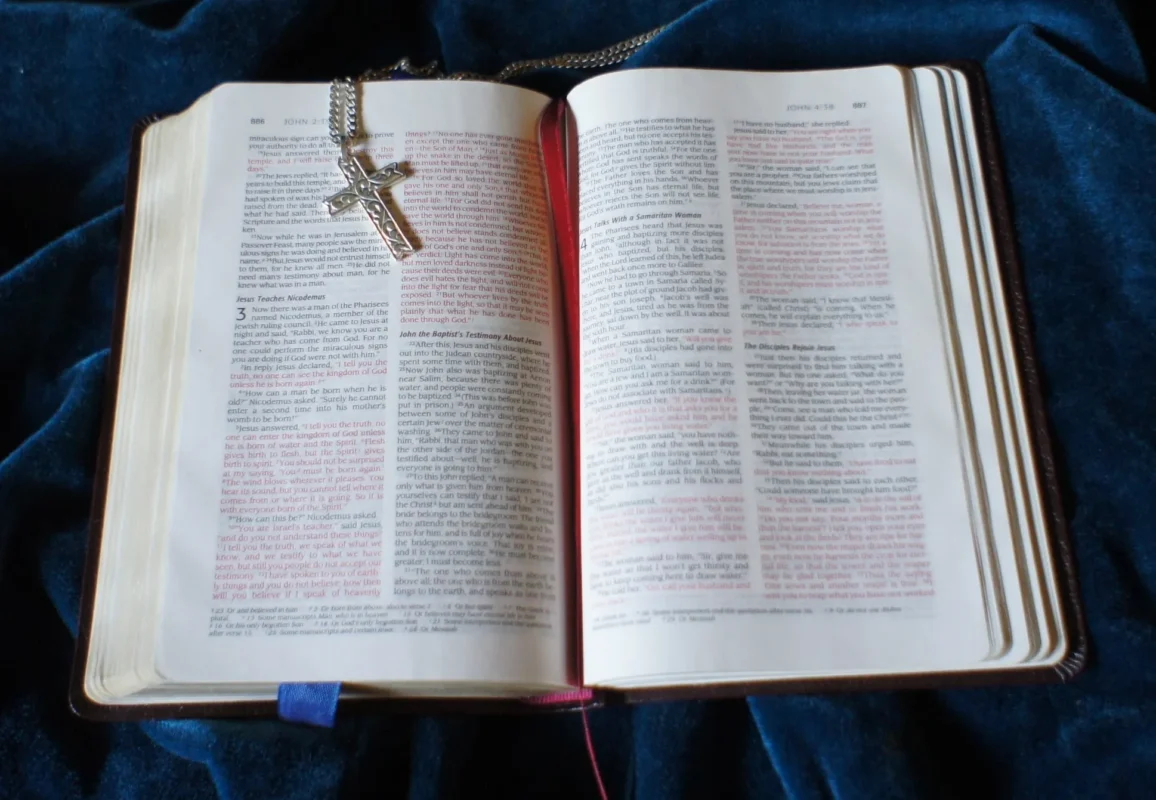
All Saints' Day. The Beatitudes. Election Day. I have been pondering the juxtaposition for some weeks. Many of us will have heard or read the appointed Gospel on November 1, which this year falls on the day before the U.S. Election Day. Many of us will celebrate the feast of All Saints on the Sunday following – November 7 this year – just days after the election. We will need the Gospel, and the reminder of the feast, on both days. For all of us in the church universal and in particular those who are citizens or residents of the U.S. – and for Anglicans of all nations at this fraught moment in the life of our Communion – it comes just in time. The feast of All Saints comes as a reminder: our primary, fundamental community, our band of companions, is not our nation or even our communion, but the saints, the friends of God. Family member, citizen, member of tribe or culture, citizen of the world, I belong to Christ before I belong to anyone else. And I belong, we belong, to the great crowd of saints, of many nations and races, holy and sinful, motley generations of them, dead and alive, the famous and the hidden, and the latter as much as or more than the former. (The feast is not about the cult of religious celebrities. The theologian Elizabeth Johnson calls it “that feast of splendid nobodies.”) We belong to them. They belong to us. This is the day to remember the fullness, the breadth and depth of the communion of saints, the history and geography of our faith, the community that knows no borders, not even those of death. In the religiously based peace of movement of the 1980s, we used to raise a question, for ourselves and for others. This was during the Cold War, in the heat of the nuclear arms race, amid public discourse of national security, deterrence and Mutual Assured Destruction (yes, the acronym was MAD). The question: “Where do we place our security?” I think it's time for that question again. Now, when so many live in the land of fear. Where is our security? In what and in whom do we trust? In the din of political and religious rhetoric, in the violence and the hopes of daily life, amid polarization and uncertainty, to whom do we belong? To whom is our primary allegiance? What is – and where is – our relationship to God, to other humans, and to the earth on which we live and upon which Jesus walked, making visible and enfleshing the unbounded love of God? (Asking all this first as an “is,” with gentle and ruthless honesty with ourselves, may be more fruitful than asking it as an “ought.” Breathe, observe, take stock: the Zen of All Saints' Day. Where have we placed our security?) And what, or who, is our primary community? The answer of faith and hope – that it is the community of the friends of Christ, the communion of all the saints, those who journey with us, who provide comfort and company on the way – is immensely comforting. It renders relative all other belongings, gives perspective to our local and global tensions, enkindles again our imagination in lonely and fearful times. We are not alone, and what company we have! So far, so good. But the saints are those who take to heart today's Gospel. And today's Gospel is one of the hardest of all. Pledge allegiance to this one and you have given over your life to the very opposite of status and success, of conquest and empire, of easy comfort, of winning at all costs. You may even lose that last mantle of protection, your reputation. But the saints are those who take to heart today's Gospel. And today's Gospel is one of the hardest of all. Pledge allegiance to this one and you have given over your life to the very opposite of status and success, of conquest and empire, of easy comfort, of winning at all costs. You may even lose that last mantle of protection, your reputation. Matthew's Beatitudes, the first of the All Saints' Day [or Sunday] Gospel options, are difficult enough. Happy are the meek? Happy the ones who mourn? Blessed are you when they persecute you? Stop. Mercy and peacemaking, yes, I'll take those. (Will I really? Every day? With every person? In every one of my communities?) But all those other ones? Luke's Beatitudes, the second Gospel option for our feast, are even more difficult to hear. Hard blessings, and woes to boot. Blessed if we weep now; later (when?) we will laugh. Woe to us if we laugh now; later (when?) we will mourn and weep. Woe to the rich, woe to the full. Didn't we leave “woe to” language behind in the old religion, whatever form it may have taken for each of us, we who revel in the unimaginable welcome of the God who embraces all? We have the option, on this feast, to read even further, beyond blessing and woe. Deeper into the heart of the Gospel we go. Love your enemies! Bless those who curse you! Give the shirt off your back! This Gospel does not merely render relative our other commitments and communities, our habits and beliefs, our societies and yes, our churches. It positively turns them on their head – or inside out. It stares us down. Nonviolently, of course. Give. Love. Bless. Do good. The Holy One, whom Jesus called Abba , is merciful. So mercy is our path, the way of the saints, those fools, our companions and our guides. Blessed are they. And we.

Jane Carol Redmont is completing a Ph.D. dissertation on the ecumenical dimensions of feminist ecclesiologies in the Southern and Northern Hemispheres, and looking for a job. She prays and preaches at Good Shepherd Episcopal Church, Berkeley, California and at St. Paul's Episcopal Church, Oakland, California. She may be reached at janered@earthlink.net. |